The Role of Botanical Ingredients in Nail Care
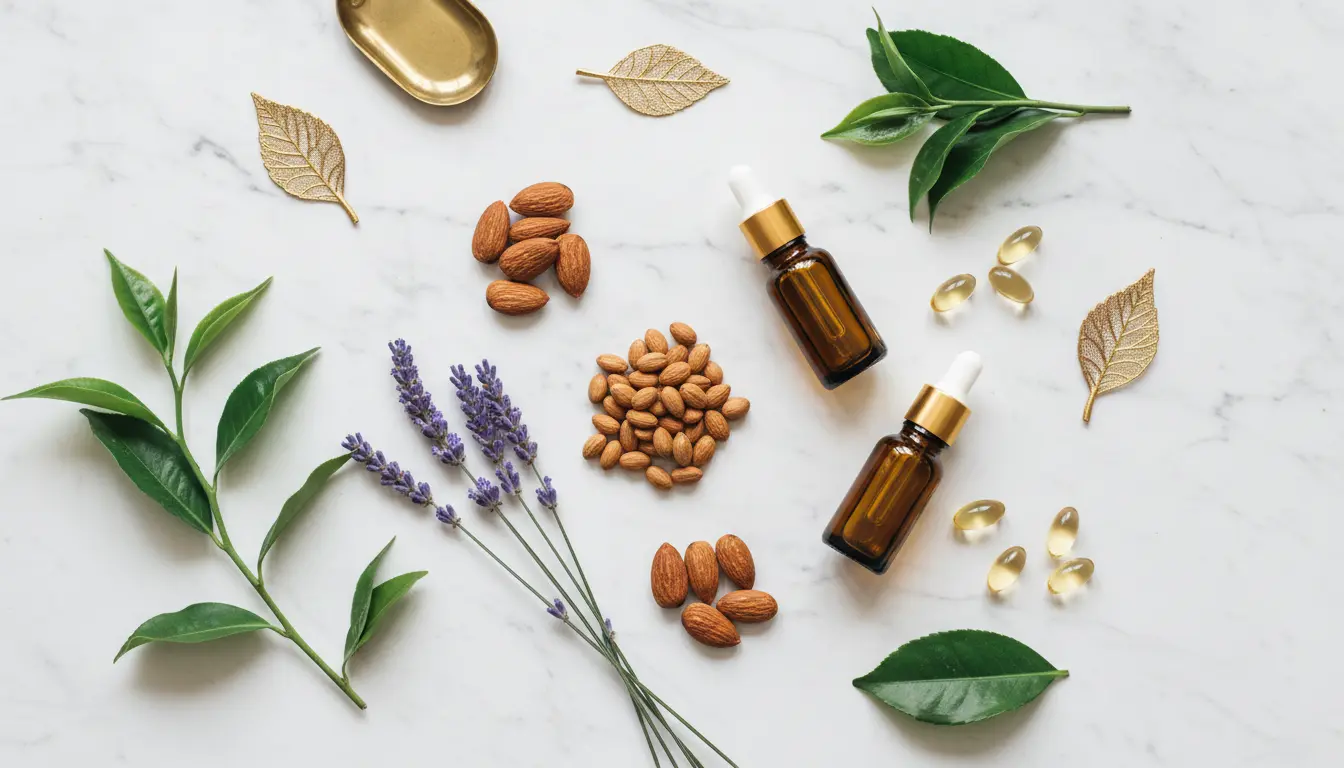
Essential oils have been used in personal care preparations for centuries, and the modern science of botanical skincare has helped establish a clearer picture of what these plant-derived compounds can realistically offer. In the context of nail and skin care specifically, several essential oils have demonstrated genuinely useful properties — conditioning, soothing, clarifying, or moisturizing — that have made them staples in quality nail care formulations.
This guide is intentionally practical rather than exhaustive. Rather than cataloguing every oil ever associated with nail care, it focuses on the ones with the most established reputations for relevance to toenail and surrounding skin care — what each one does, what its limitations are, and how to use it correctly.
One important framing note: essential oils in nail care work best as conditioning and supportive ingredients, not as treatments for medical conditions. This article discusses their role in a cosmetic nail care context only.
Tea Tree Oil (Melaleuca alternifolia)
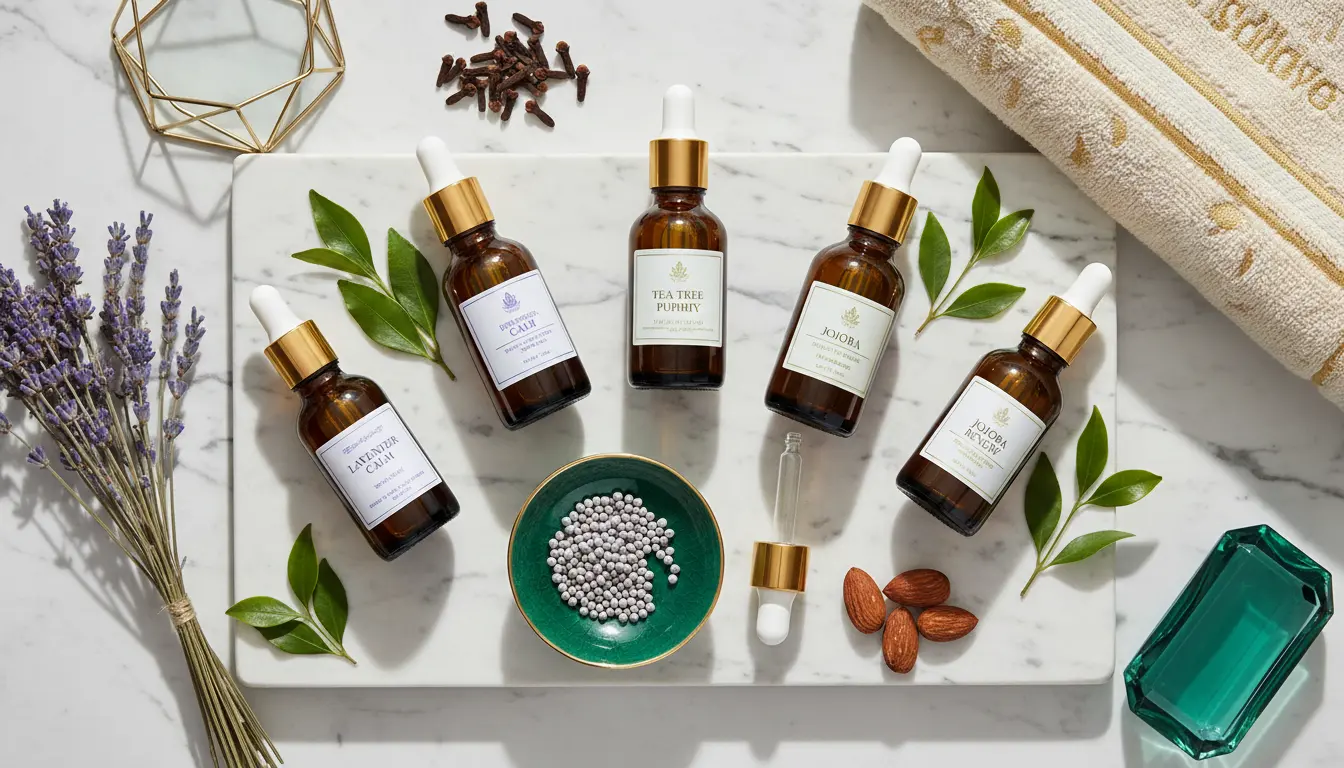
Tea tree oil is the most widely recognized botanical ingredient in nail care, and for good reason. Extracted through steam distillation from the leaves of an Australian shrub, it has been used for generations in topical applications. Its primary value in nail care lies in its clarifying properties and its long-established use in supporting a clean, well-maintained nail environment.
In practical terms, tea tree oil is rarely used alone in nail care — its concentration and potency make it better suited as a component within a properly formulated product than as a standalone application. When diluted in a carrier oil or incorporated into a nail care formula, its clarifying and soothing properties are preserved while the risk of skin irritation is minimized.
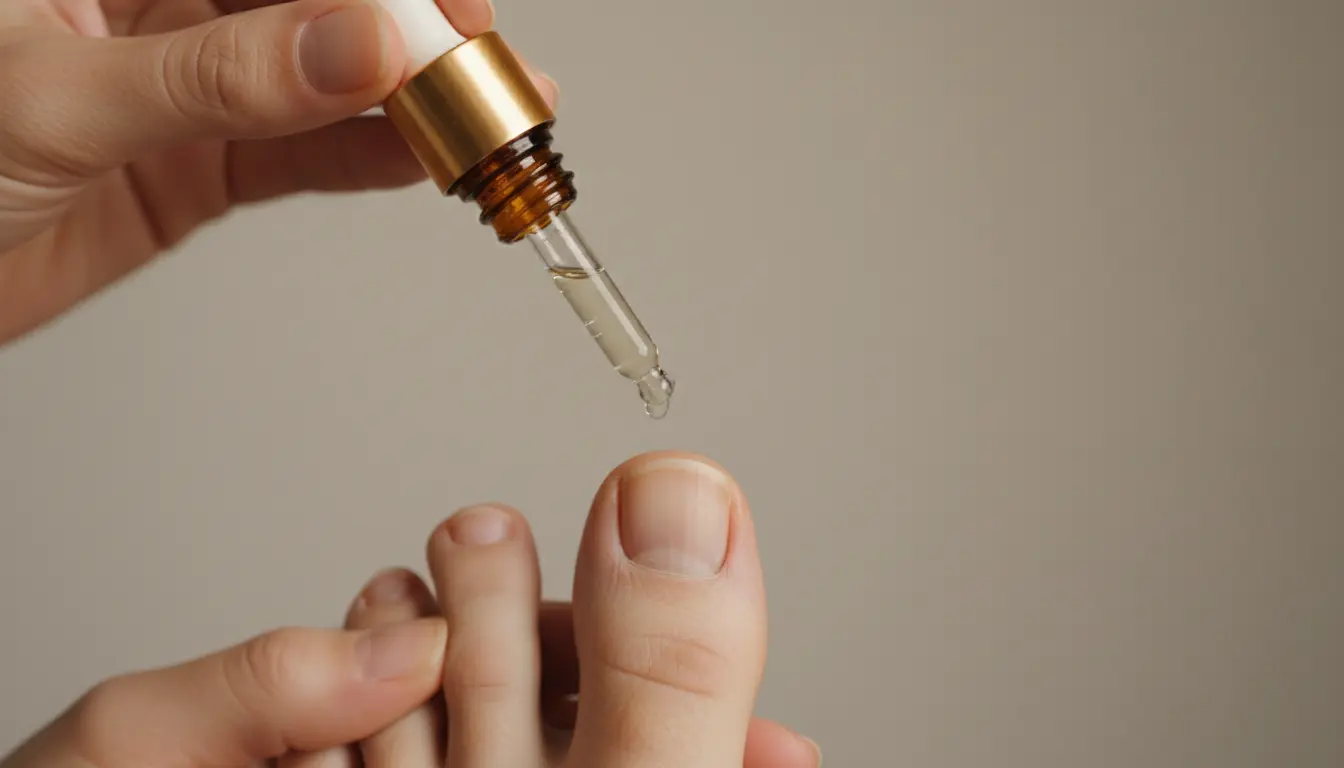
If using tea tree oil independently, always dilute: approximately 1–2 drops per teaspoon of a carrier oil such as jojoba or almond. Never apply undiluted directly to skin, particularly the delicate tissue around toenails.
Lavender Oil (Lavandula angustifolia)
Lavender oil is one of the most comprehensively researched essential oils in the world, with a documented history of use across skin care, aromatherapy, and traditional personal care preparations. For nail care, its primary value is its soothing and calming effect on the skin surrounding the nail area. Applied to the cuticle and nail border, lavender oil supports skin comfort and contributes to a conditioning environment that complements the nail care process.
Lavender is also one of the gentler essential oils from a skin tolerance perspective. Some aromatherapy guidance suggests that lavender can be used in small quantities without dilution — though for most practical nail care purposes, diluting it in a carrier oil remains the safer and more consistent approach.
Its mild, pleasant fragrance is an additional benefit — it makes the nail care routine a more enjoyable sensory experience, which is a genuine (if overlooked) factor in building a sustainable daily habit.
Jojoba Oil (Simmondsia chinensis)
Technically a liquid wax extracted from the seed of the jojoba plant, jojoba oil is one of the most scientifically interesting ingredients in skin and nail care. Its molecular structure closely resembles the skin's own natural sebum — the lipids the skin produces naturally to maintain its moisture barrier. This structural similarity means jojoba absorbs readily, doesn't clog pores, and doesn't leave a heavy or greasy residue after application.
For toenails and surrounding skin specifically, jojoba oil is a highly effective daily conditioning agent. It moisturizes the nail plate, softens cuticles, and conditions the skin along the nail border in a way that absorbs cleanly and is practical for pre-footwear application. It also serves as an ideal carrier oil for other essential oils in DIY nail care blends, supporting their absorption without diluting their properties excessively.
Jojoba's long shelf life (it is naturally resistant to oxidation) makes it a practical choice for storage in nail care preparations.
Sweet Almond Oil (Prunus amygdalus dulcis)
Sweet almond oil is a light, nourishing fixed oil (carrier oil) pressed from the kernels of sweet almonds. It has been used in skin care for centuries across multiple cultures, valued for its ability to soften and smooth skin without causing congestion. For nail care, it provides a rich but lightweight conditioning medium that works particularly well for the delicate skin surrounding toenails.
Unlike some heavier oils that can feel uncomfortable in footwear, sweet almond oil absorbs at a moderate rate that is practical for daily use. It works well either as a standalone nail and cuticle conditioner or as a carrier base for essential oil blends. Its mild, slightly nutty scent is generally well-tolerated and fades quickly after application.
People with nut allergies should note that sweet almond oil is derived from almonds. While topical reactions are less common than dietary reactions, individuals with known almond or tree nut allergies should exercise appropriate caution.
Clove Bud Oil (Eugenia caryophyllata)
Clove bud oil has a long history of use in traditional and natural health preparations, and appears as an ingredient in various nail care formulations. It is a potent oil with warming properties, and is typically included in nail care contexts for its supportive contribution to the overall nail environment.
Clove oil is among the more potent essential oils from a skin sensitivity perspective. It requires a careful dilution approach — typically at concentrations of 0.5% or lower for topical use — and should not be applied directly to skin at full concentration. When properly formulated into a nail care product, these considerations are handled by the formulation itself.
For DIY purposes, clove oil should only be incorporated into nail care preparations at very low concentrations within a carrier oil base, with a skin patch test before use.
Argan Oil (Argania spinosa)
Argan oil — extracted from the kernels of the argan tree native to Morocco — has earned its reputation in both hair and skin care over the past decade. Rich in vitamin E, oleic acid, and linoleic acid, it provides deep nourishing support to both the nail plate and the surrounding skin. Its relatively quick absorption for such a nutrient-dense oil makes it particularly practical in nail care contexts.
For the nail border and cuticle area specifically, argan oil's combination of antioxidant vitamin E and essential fatty acids provides conditioning that penetrates more deeply than lighter oils alone. It works well combined with jojoba as a base for a daily nail conditioning blend, or on its own as a targeted cuticle treatment.
Quality matters with argan oil — look for cold-pressed, unrefined versions for maximum retention of its natural active components.
How to Use Essential Oils Safely in Your Nail Routine
If you're creating your own nail care preparation using essential oils, a few principles consistently apply:
- Always dilute: Essential oils are highly concentrated extracts. Use a carrier oil (jojoba, sweet almond, or argan) as the base, adding essential oils at a dilution of approximately 1–2% — roughly 1–2 drops per teaspoon of carrier oil. For sensitive skin, start at 0.5%.
- Patch test before use: Apply a small amount of your blended preparation to a small area of skin — such as the inside of the wrist — and wait 24 hours before applying to the nail area. If irritation occurs, reduce concentration or discontinue.
- Store correctly: Essential oils degrade with exposure to heat, light, and air. Store blends in dark glass bottles in a cool location away from direct sunlight. Most properly stored blends remain effective for 3–6 months.
- Use consistently: Like all nail care approaches, essential oil-based routines produce their best results with daily, consistent application over time. Occasional use provides minimal sustained benefit.
- Keep away from eyes: Essential oils should never come into contact with eyes or mucous membranes. If accidental contact occurs, flush with a carrier oil (not water) first.
Getting the Benefit Without the Complexity
Building your own nail care blend with individual essential oils requires sourcing quality ingredients, understanding correct dilution ratios, managing storage, and maintaining consistency with a preparation you've made yourself. This approach works well for people who enjoy DIY personal care — but for most people, a quality pre-formulated nail care product provides the same botanical benefits without the complexity and guesswork.
KlaroNail Premium Formula incorporates several of the key botanical ingredients covered in this guide — including tea tree oil, lavender oil, jojoba oil, and sweet almond oil — in a professionally formulated, ready-to-use daily conditioning product. The formulation handles dilution, blending, and stability so you can focus on the only variable that ultimately determines results: consistent daily application.
Frequently Asked Questions
Most essential oils should be diluted in a carrier oil before topical application to skin. Undiluted essential oils can cause skin irritation. Use a dilution of approximately 1–2 drops per teaspoon of carrier oil (jojoba, almond, or argan). Pre-formulated nail care products handle this correctly by design.
Daily application after bathing produces the best cumulative results over time. Consistent daily use — rather than occasional intensive applications — is what creates lasting improvement in nail and surrounding skin appearance.
Jojoba oil and sweet almond oil are among the most effective for conditioning the skin around toenails. Lavender oil also provides soothing support to this delicate skin area. These are best used in combination for comprehensive conditioning support.
When properly diluted in a carrier oil or professionally formulated into a nail care product, tea tree oil is widely and safely used in topical nail care. Avoid applying it undiluted to skin, as it can cause irritation at full concentration, particularly on the delicate nail border skin.
Yes. KlaroNail Premium Formula includes botanical ingredients including tea tree oil, lavender oil, and jojoba oil among its conditioning components — professionally formulated for safe and effective daily use on toenails and surrounding skin.